Monday, April 19, 2010

Orpheus, "Can't Find the Time"

In the late '60s, a band arose from Worcester, MA, named Orpheus, after the Greek god of songs. Orpheus was ultimately a tragic figure in the Greek pantheon - his wife Eurydice was killed by a snake at their wedding, and his attempt to retrieve her from Hades ended in an even sadder fashion - and Orpheus the band didn't have the happiest ending either.

At the time Orpheus the band was making regional waves, popular media were taking note of the "San Francisco sound" - a convenient buzz phrase identifying all the hippie jammers shaking things up in '67, from the Airplane to the Dead to Quicksilver and so forth. The scene had grown organically and helped drive thousands of young folks to head West and apprehend a new way of life. So, of course, a guy got the bright idea to manufacture a similar "scene" in Boston, another city with a thriving crop of youthful musicians. That the bands in the "scene" were of wildly divergent styles and barely knew much less jammed with one another mattered little - they would be "the Bosstown sound," the kids would like it, and that was that.

But the kids recognized contrivance for what it was, so a lot of those Boston-area bands got a bad rap for the disbelieved hype. And Orpheus may have been the most shafted of them all. Sure, their lyrics could be possessed of hokey, dated catchphrases ("baby, remember when we turned on to a rainy day"), but their music was sophisticated, jazz-informed, with unexpected chords and tasteful orchestration augmenting their sweet melodies. They made the nether reaches of the Hot 100 twice, with the songs "Can't Find the Time" and "Brown Arms in Houston."

Happily, the former retains some cachet among oldies connoisseurs - even clocking in at #2 in a recent music-fanatics poll of the all-time "shouldabeens" (as in, shoulda been a bigger hit) - and remains in rotation on Boston oldies radio. It's an all-time favorite of mine, and I hope you'll enjoy it too - since later this week I'll spotlight another version or two of "Can't Find the Time." Enjoy.

Thursday, April 15, 2010

Everything Is Everything, "Witchi Tai To"

On America's infamous Tax Day, I'd like to remind everyone that to be taxed is a privilege. It is a remarkable achievement that the U.S. has been able to pave roads, deliver mail, put out fires, police streets, educate children, and in so many other ways "provide for the common defense and promote the general welfare" of its people. I fail to understand how all the Tea Partiers and people threatening to "go Galt" can claim to love America and yet hate Americans so. Seems to me that a truer patriotism is to help ensure that our fellow countrymen have a fighting chance of survival.

But let me offer something ameliorative rather than confrontational regarding the day when the big bill comes due. "Witchi Tai To" was a #69 hit in 1969 for Everything Is Everything, featuring songwriting and vocals from the late saxophonist Jim Pepper, who apparently said once that the seemingly Native American phrase witchi-tai-to doesn't actually mean anything. Still and all, it's a nice, soothing song that evokes the utopian we're-all-in-this-together warm fuzzy feeling that one only gets these days in San Francisco or on drug excursions.

Enjoy.

Tuesday, March 30, 2010

Wilco, "Any Major Dude Will Tell You"

Someone I know is presiding over the dissolution of a relationship this week. The relationship in all but name ended some months ago; the only difference is that now the separation will be physical as well.

I'm not an unbiased observer, and I don't know the whole story - which makes me the worst person to chime in, except to say that I considered posting for today's entry a number of kiss-off songs on my friend's behalf, motivated by a bitter need to pitch a snit: Teddy Pendergrass's "I Don't Love You Anymore" (nah, too vindictive); Elton John's "Someone Saved My Life Tonight" (too melodramatic, and no Sugar Bear in the storyline); New York City's "I'm Doin' Fine Now" (close, but too many differences in the details). I considered "I'll Be Alright Without You," Journey's last good single, and an appropriate sentiment (but holy period hair, Batman!).

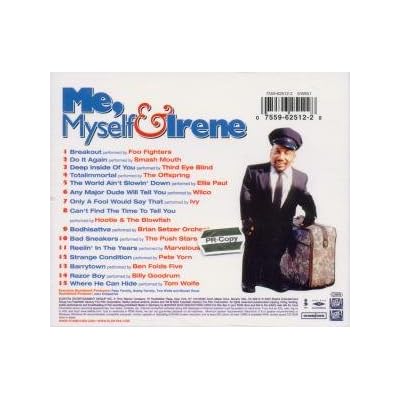
But instead of snapping at a third party second-hand and making a tough situation worse, I'll offer some words of consolation for someone who once sent me the same words when I underwent a rough patch years ago. "Any major dude with half a heart surely will tell you, my friend / Any minor world that breaks apart falls together again." We undergo changes. Maybe we melt down, dissolve; but even if so, from that salt and water and our essence we rebuild. At least, that's the optimism I pull from Becker and Fagen's logic on one of their prettiest tracks. But since I assume you've heard the Steely Dan original plenty of times, let me give a spotlight to Wilco's gentle cover of "Any Major Dude Will Tell You." It appears, along with a number of other Dan covers of wildly varying quality, on the soundtrack to Me, Myself and Irene, a Farrelly Brothers comedy I've never been the least bit curious to see. But I bought the soundtrack, since it has the aforementioned Dan covers, and what else should it have but Hootie and the Fricking Blowfish doing a cover of one of my all-time favorite songs, and a true obscurity at that, "Can't Find the Time." But that's a story for another day.

Thursday, March 25, 2010

Brooklyn Bridge, "Blessed Is the Rain"

Rock 'n' roll heaven got a bit more crowded over the past week: first, Alex Chilton - who's a topic for another day - and today, Johnny Maestro, whose fame came in two acts spaced a decade apart. As one of the Crests, he scored at the end of the '50s with "Sixteen Candles" and other soppy oldies; a decade later, his then band the Del Satins got together with a group called the Rhythm Method (ahem) to form the Brooklyn Bridge. (So named because the 11-piece unit that resulted from the merger was said to be "as easy to sell as the Brooklyn Bridge.")

The BB are best known for their Top 5 rendition of Jimmy Webb's forlorn wedding-bell blues "Worst That Could Happen," but today I'd like to spotlight one of their forgotten follow-ups. From the same year, here's the big Bklyn bunch singing "Blessed Is the Rain", a #45 charter that deserved better. (Ignore the YouTube poster's mistitling of the song as "Yesterday the Rain.") RIP, Johnny.

Tuesday, March 23, 2010

The Music Scene Singers, "Sugar Sugar"

As Mike alluded in his response to yesterday's post, James Brown's stunning "World" performance came on a short-lived ABC show from late '69 titled The Music Scene. Wikipedia tells me that the show, though it was groundbreaking and featured several of the day's biggest musical performers, failed promptly - one, because The Young Generation wasn't considered a prime target market for advertisers, and two, because it clocked in at an unusual 45 minutes. (It was paired with another 45-minute show, a pre-Lost stranded-on-an-island fantasia called The New People.)

I need to learn more about The Music Scene - if only because the people behind it were daring/insane enough to turn the Archies' too-bubblegum-for-the-Monkees "Sugar Sugar" into a gospel- and daishiki-soaked soul shout from what I take to be the show's house band. In our continuing musical education, I present: The Music Scene Singers, "Sugar Sugar." I hope you're as fascinated as I was.

Monday, March 22, 2010

James Brown, "World"

I've been trying for a long time to track down a long-forgotten James Brown charting single from the fall of '69 that showed off his social consciousness rather than his funky strut. It wouldn't have been out of place on his Christmas albums that offered universal, nondenominational sermons on the need for peace and love, where it would sit alongside such songs as "Let's Unite the Whole World at Christmas" and "Hey America."

Making this tune even harder to find, beyond its being funk-free and thereby less radio-friendly for retro R&B stations, is that a search for "James Brown World" invariably points one to the far more famous "It's a Man's Man's Man's World." But at last, the object of my desire up on YouTube - in a very well lip-synched performance whose silent participants' studied, impervious disdain takes JB to a very new performative level. One might very well imagine James making this plea to the Americans who did not want health care to reach everyone in America. Or to these assholes.

In any case, I'm happy to at last present James Brown's "World," and hope that you find it as powerful as I do (despite its crappy production). As the man says: "Please, please give a damn."

Thursday, March 18, 2010

Helen Reddy, "Emotion"

As I mentioned yesterday, I'm pleased to introduce a guest blogger taking the reins today. Mike Schaefer is a longtime friend of mine - a fellow KFOG 10@10 time traveler - who spent years in New York radio before moving to San Francisco, where he shares my love of pop/rock music and the charts and trivia therein. L&Gs, here's his history lesson on a pretty melody from the early '70s that surfaced in a few different iterations - and then surfaced again this weekend. Take it away, Mike!

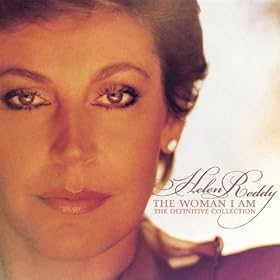
Last weekend I was listening to the '70s version of "Classic Casey Kasem." It was a chart from March of 1975, and what popped up but Helen Reddy's lovely, forgotten "Emotion," a ballad that peaked, shockingly, at only #22 - breaking Ms. Reddy's then-hot streak of 7 consecutive Top 15 singles. I was reminded that the song was the endpoint of a series of versions of the tune. And so today, a musical history lesson: the evolution of a song.

In 1972 Véronique Sanson recorded (in French) a song about a young woman who's just lost her virginity: "Amoureuse." You may recognize the melody. The following year, a pre-Elton Kiki Dee took a more-or-less literal English translation (also titled "Amoureuse") into the U.K. Top 15.

Sanson then recorded the English version herself, and it garnered some U.S. airplay, becoming something of a "turntable hit" in 1974 at NYC's prog-rock powerhouse WNEW-FM, where it was a fave of deejay Dennis Elsas. That version - I had not yet heard the previous two - instantly became one of my favorite "shouldabeen" hits. (I just love that line about feeling "the rainfall of another planet.") Olivia Newton-John would also record this version.

In the meantime, however, a woman named Patti Dahlstrom wrote a new and different set of English lyrics to Sanson's melody and called it "Emotion." Dahlstrom was a friend of Paul Williams - who had a major connection to Helen Reddy, who'd just had a huge hit with his "You and Me Against the World." That got the song to Helen, who recorded it. When it popped up in the Top 40 in early '75 I was confused, since I recognized the melody but not the lyrics. It would be decades before the interwebs afforded me the opportunity to put the above pieces together in the proper order. Thank you, Wikipedia!