Thursday, April 30, 2009

Three Dog Night, "Pieces of April"

I went to college in the days immediately preceding the World Wide Web's takeoff among the general public. In its stead, I spent much of my online time grazing Usenet, a hierarchical set of forums with self-explanatory names like rec.arts.poetry and rec.music.monkees. (And less-self-explanatory ones like soc.motss - in the days when it wasn't OK to be gay, we spoke stealthily of our love under this inside acronym for members of the same sex.)

One day there was a discussion at rec.music.misc of songs that involve murders. "Hey Joe," "Down by the River," and the like. Thinking myself clever, I chimed in, "What about 'Pieces of April'?" (A moderate 1973 hit for Three Dog Night, most assuredly not about a murder, written by Dave Loggins, who would write for them the even prettier "Til the World Ends" before having his own hit with "Please Come to Boston.")

Someone far more clever immediately shot back: "Is that why there was a mourning in May?"

So here's to Usenet, here's to Three Dog Night and one of their underappreciated ballads, and here's to making it through a mostly chilly and partly pollenated April.

Wednesday, April 29, 2009

Sharon Jones and the Dap-Kings, "100 Days, 100 Nights"

News outlets all over are marking Barack Obama's 100th day in office. It's an outdated and not useful benchmark (as in, not relevant to any President since FDR), as Joe Klein of Time magazine recently observed - but even if "the idea that a President can be assessed in a mere 100 days is a journalistic conceit," it's an irresistible one.

And the 100-days thing applies to more than gauging a presidency, as Sharon Jones and the Dap-Kings advised us two years ago on the title track to their wonderful album 100 Days, 100 Nights. It takes 100 days to know a man's heart, Sharon tells us: a flawed guy can fake-it-til-he-makes-it for a short while, but eventually his true colors show. "You know, a man can play the part of a saint just so long."

I've found this to be empirically true: most notably, it was at right about the 100th day of living with a certain ex-roommate that he bailed town, in a scene right out of Aimee Mann's The Forgotten Arm album. It is at around that 100th day of knowing someone that you know what kind of person he will be.

So President Obama, getting back to you - I'm glad you've moved forward with your ambitious and, yes, audacious agenda for America, not letting the wingnuts and verbal snipers distract you from the big picture of how to improve America and thus improve the world. Congrats on the progress thus far in this first mile of your long journey as our President.

Tuesday, April 28, 2009

Bea Arthur and Rock Hudson, "Sniff, Swig, Puff"

When I heard this weekend about the death of longtime comedic actress Bea Arthur, I figured I'd pay an obvious homage with Andrew Gold's "Thank You for Being a Friend," a Top 40 chart hit for him in 1978 that is of course far better known today as the Golden Girls theme song. But I liked Bea a lot better as Maude, really - her self-righteous sanctimony was just more flavorful in that role - and besides, a friend reminded me of a far better clip to share, one that shows Bea's singing talents, such as they were.

"Sniff, Swig, Puff" (at least, I'm assuming that's the name, based on the YouTube uploader's enthusiastic comments; else I'd have thought it was titled "Everybody Today Is Turning On") is something that needs to be seen and heard to be believed. It aired on a 1980 variety show, The Beatrice Arthur Special; if this deliciously snippy review is at all accurate, it was right up there with Pink Lady & Jeff as murderers of the variety-show TV genre. Bea and guest star Rock Hudson show an uncomfortable awareness of drug argot - not to mention of the sex trade; are they really making poppers jokes on national television in 1980? I guess Rock would know from amyl nitrate better than most. Whatever you make of it, pretend their brassy, braying harmonies actually harmonize, have a laugh ... and be glad I didn't upload something from Bea's equally misguided endeavour, the Star Wars Christmas special.

RIP, Bea. Thank you for being not just a friend, but a good sport.

Friday, April 24, 2009

Friday Funtime: It Was Earth Day

Mother Earth had her day in the sun, as it were, this week. I was busy talking about other things on Wednesday, and today I was busy doing job stuff, so here's a very belated tribute to the simple pleasures of nature and the importance of ensuring our children may enjoy them too. Many thanks to my good friend Mike, who posted several of these on Facebook; I'm cribbing.

And happy day to all you Administrative Professionals out there. (Formerly "Secretaries' Day," and who has one of those anymore?)

1. Three Dog Night, "Out in the Country"
2. Guess Who, "Share the Land"
3. Spirit, "Nature's Way"
4. Quicksilver Messenger Service, "Fresh Air" (Indulge me this one, won't you?)
5. Hair OST, "Air"
6. Cat Stevens, "Where Do the Children Play?"
7. Joni Mitchell, "Big Yellow Taxi"
8. Pete Seeger, "Garbage"
9. Marvin Gaye, "Mercy Mercy Me (The Ecology)"
10. Michael Jackson, "Heal the World"

Thursday, April 23, 2009

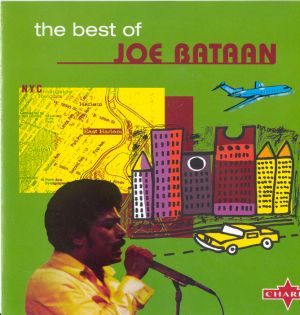
Joe Bataan, "Rap-O Clap-O"

The last day - indeed, the last panel - of the EMP Pop Conference saw musicologists discussing work that either never saw the light of day or simply did not see enough of it. This was the most educational part of the conference for me; I finally gained some exposure to the dirty funk of Betty Davis (fascinating, but I'll take Millie Jackson over her, as underserved '70s R&B goes) and learned that Chic produced an album for Johnny Mathis in 1981, I Love My Lady, that was never released at all.

And I was introduced to "Rap-O Clap-O," a fun slice of period street rap from a half-black, half-Filipino man named Joe Bataan whose lack of mainstream U.S. success in part owed to his not being fully embraced by either community. The tune's infectious clapping is followed by a groove in the "Best of My Love"/"Got to Be Real" vein, then some not-half-bad rapping (no worse than Sugarhill, surely), light on the boasting and heavy on the dance-floor motivation. I don't post nearly enough dance music here, so rock back and enjoy this one for a few minutes.

PS: Bataan also recorded a cover of Gil Scott-Heron's "The Bottle" that is well worth seeking out.

Wednesday, April 22, 2009

Boy George, "No Clause 28"

I'll save Earth Day for another day - Earth Day is every day, right? - so that I can continue on with EMP recaps.

One of the many conference speakers was Amanda Villepastour, an ethnomusicologist who spent several years as a touring musician with Boy George; she gave a talk on the bullshit he went through during and after his Culture Club years because of his sexuality and gender-tweaking self-presentation. She said she saw homophobia directed at him "almost on a daily basis" while working with him from 1988 through 1994. (As well as an attempt at entrapment via heroin, but that's a subject for another day.) He'd been prevented throughout the '80s from living life as his authentically outsize self for a number of reasons: he was in a clandestine relationship with his closeted bisexual drummer, Jon Moss, which he didn't wish to imperil by outing him; the press preferred to speculatively tut-tut than to deal with a sexual reality; the band's record label, not wanting to risk losing a cash cow, discouraged George from saying the words most who followed the band knew to be true.

In the late '80s, a Thatcherite law, Section 28, was implemented in the United Kingdom, stating (as Wikipedia summarizes) that any UK local government "shall not intentionally promote homosexuality or publish material with the intention of promoting homosexuality" or "promote the teaching in any maintained school of the acceptability of homosexuality as a pretended family relationship." (Ah, there's that word again, with regard to family and union: pretended. I've been railing for months here against the attempts by the right wing to inauthenticate same-sex relationships, to declare them inferior and invalid. Here was an instance of political forces doing so in a strikingly overt and brazen manner.) Section 28 had been "inspired" by both the AIDS crisis and the small number of books of the Heather Has Two Mommies ilk. The law went into effect in the spring of '88.

Boy George - who by this point had dissolved both Culture Club and his relationship with Moss, leaving him marginally more free to come out - responded swiftly with a propaganda dance record, "No Clause 28," that cast the argument in simple and human terms: "To tamper with our pride, they say to celebrate it is social suicide." On its sheer musical merits, "No Clause 28" isn't a great record - it's a synthpop period piece, with passable vocals and some sly lyrics (and one has to wonder if Flavor Flav appreciated the repurposing of his "Yeeeah, boyeeee" catchphrase) - but it was a display of courage from someone who still had a great deal commercially to lose by allying himself with the unpopular cause of gay rights.

George's career more or less died soon after, though he maintains a reputation in certain clubbing circles. But Clause 28 was ultimately repealed at the end of 2003. And so we gays lived happily ever after.

Er, except that we still don't have our fucking rights.

Tuesday, April 21, 2009

Laura Nyro and LaBelle, "It's Gonna Take a Miracle"

The first night of this year's EMP Pop Conference offered a conversation with Nona Hendryx, for years a member of Patti LaBelle and the Blue Belles and then LaBelle, where she, Patti, and Sarah Dash moved from girl-group street-corner harmonizing to spacey glam-funk. She's worked with dozens and dozens of gifted and influential musicians and producers of every genre in the pop-soul spectrum, and had a lot of great insights into the music world.

But her conversation with Daphne Brooks and Sonnet Retman was stilted at times, the moderators spending more time rooting through their notes for questions to ask than actually absorbing and reacting to Hendryx's observations. Nevertheless, I was glad to have attended, to have gleaned some history I never knew and to hear stories of a music industry less contrived than today's, in an era when a group like LaBelle could make sonic and visual decisions based on what they wanted, not on what they or their handlers thought was marketable.

The casual music listener likely knows LaBelle only for their #1 hit "Lady Marmalade." I'm going to skip that in favor of one of their less well-known efforts: they provided backing vocals on Laura Nyro's 1971 album Gonna Take a Miracle, garnering a name credit for their efforts. Nyro gives the almost-title track "It's Gonna Take a Miracle" one of her best readings - thankfully, she forgoes the tempo shifts and wobbles that render some of her work dizzying and indulgent. (Like Dylan and P.F. Sloan, she was far better off writing for others than for herself.) Her version of "Miracle" doesn't ascend to the heights of the Royalettes' original (which sadly topped out at #41 on the charts) or Deneice Williams' more successful remake. But it holds up nicely, and those opening harmonies are good for a shiver or two down the back.

And a bit of trivia, courtesy of Nona: on a bet Patti had made with (the producer? I forget), LaBelle laid down all of their backing tracks for the entire album in a mere 7 hours.

Thursday, April 16, 2009

Nirvana, "Where Did You Sleep Last Night?"

"The bluest skies you've ever seen, in Seattle / And the hills, the greenest green, in Seattle." Pop Argot's off to the great northwest for the annual EMP Pop Conference, a confab of dozens of the nation's leading music critics, journos, historians, ethnomusicologists, and the like, to talk shop and break bread. It's always a joy to be there. But that means no more posts until next week.

So for now, in tribute to one of my favorite cities, here's Seattle's favorite musical son - and I should note that last week I missed the 15th anniversary of his death. That event wasn't a big moment for me, I must admit. I mean, I remember exactly where I was when I heard the news - I was walking through Caflisch Hall in between classes when Kurt Loder was talking about it on MTV. But Nirvana weren't what I listened to with regularity. I did know, when I first heard "Smells Like Teen Spirit" in the fall of '91 on the campus radio station, that a wind of change had come, but vocally Kurt Cobain wasn't where I was at. Still isn't, though I mightily respect his pained voice's power on this live performance of "Where Did You Sleep Last Night?" Does send more than a few chills.

Ultimately, though, I find that Nirvana means a great deal to rock music but not a great deal to me. And I don't wonder what would have happened had Kurt not killed himself - because then I'd fear he'd have instead become a Layne Staley, or worse, an Andy Dick.

On that cheery note, see you all next week.

Wednesday, April 15, 2009

Sharon Jones and the Dap-Kings, "What If We All Stopped Paying Taxes?"

"What If We All Stopped Paying Taxes?" Sharon Jones and the Dap-Kings have wondered aloud. The question was quite a sensible one over the past eight years as our tax money was squandered on an irresponsible and poorly managed war - all the more galling given the loose methods and looser morals that permitted those most able to pay them to get out of their duty. The conservatives who call me unpatriotic for being a gay peacenik ought to point their fingers at their wealthy comrades with tax shelters in the goddamn Cayman Islands. They are the ones who demonstrably do not love America.

Happily, there's a new sheriff in town, and it's easier to feel good about paying taxes. "WhatIif We All Stopped Paying Taxes?" is no longer the operative question. ("I'm Payin' Taxes, What Am I Buyin'" is a more apt query today, but alas, that Fred Wesley & the JB's song does not exist on YouTube.) The poet Nikki Giovanni once declared in a lecture I attended that it is a privilege to pay taxes, to be a part of a system that educates our children and paves our roads and heals our infirm. I've often thought about that notion, and I'm thinking about it today. April 15, as we scramble to file our returns, is for many a sad and stressful day, but it actually reminds us Americans of some of the ways that we're all in this together.

On the other hand, April 15 also gives us the worst Schoolhouse Rock song ever.

PS: Giving the gas face to anyone engaging in Fox News's "tea party" faux-nomenon.

Tuesday, April 14, 2009

John Lennon, "Instant Karma"

There is nothing funny or witty about Phil Spector's murder of Lana Clarkson. Well, yeah, the wigs were a sight - but they served to trivialize and divert attention from the loss of a life, which I believe was at least partially intentional on Spector's part.

And as one life ended, alas, another did too, though Phil's took several years to wind its way through the courts and may well take several more years of appeals for justice to resolve. I offer only a few half-formed meager thoughts on the matter:

He wore on his head a fright wig
(Strategic gambit, that -
Diverted all attention from his eyes).
And you never saw his eyes.
Always there were screens,
Filters; walls, if you will.

Over months of testimony
He strode, strutted; then strained,
Then shrank, and finally shriveled.
The same madness that had once
Enabled him to create joy for millions
Sent him to a place few can know.

Some among the exceptional people
Learn to enjoy the indulged ride on the outside
And forget to live by the same rules
As those around them. Renegades
With entitlement always are brought down;
Instant Karma’s not instant, but it gets you.

Monday, April 13, 2009

Linda November, "Galaxy Glue"

I'm sorry, people. I got nothin' for ya today. So consider today's entry a commercial interlude: another in my admittedly meager annals of "Great Moments in Movie History." I've long been a fan of the forgotten 1981 Lily Tomlin social-message comedy The Incredible Shrinking Woman, and every once in a while I still get stuck in my head its mindless commercial jingle "Galaxy Glue."

And now you can too.

Thursday, April 9, 2009

Adam and the Ants, "Prince Charming"

A colleague earlier this week called to my attention the death of Jack Wrangler, an openly gay man best known - as his name would suggest - as a '70s porn star. And not just a porn star - one of the best. But I had to sheepishly confess at that point that I'd never heard of him.

I know a bit now - of his adult films, both gay and straight; his other artistic endeavors, mostly in cabaret and theater; and, most interesting to me, his marriage for many years to songstress Margaret Whiting. A man who loved many men on and off camera found a lasting love with a woman two decades his senior.

Putting aside any squeamishness one might have about the adult-film industry, it's interesting to contemplate the success of such nontraditional relationships as Jack and Margaret's. Indeed, as Village Voice gossip maven Michael Musto recounted last year, the two became an item after she saw one of his solo performances. They cohabitated for several years before marrying - and he continued to identify as gay all the while.

Somehow they transcended - and perhaps embraced, who knows - sexual attraction, finding in each other a kindred spirit with whom they could achieve life-partner status. I take heart in knowing that such unconventional couples exist - Jack Wrangler and Margaret Whiting; Beat poet Allen Ginsberg and Peter Orlovsky, who remained partners for decades although Orlovsky was predominantly heterosexual. They prove that the labels go only so far, that it's possible to experience love in a way that contradicts or ignores one's tightly held concept of identity. I admire that freedom - the ability to say, as Wrangler is quoted in a sensitive SFGate.com obit, "I was never ashamed of anything I did." Wrangler lived as he wanted, how he wanted, with whom he wanted. One can hardly ask for more than that from life.

So how do I tie this into a song? I don't, really. I'll just point you to another sex-and-gender libertine, Adam Ant, who in this clip for 1981's "Prince Charming" plays dress-up with his fellow Ants in what I take to be an early treatment for Pirates of the Caribbean IV: The Pirates Take Rehoboth Beach. They get away with it because, as Adam sings, "ridicule is nothing to be scared of." Here's to everyone who's not afraid to be dandy.

Wednesday, April 8, 2009

Prince, "Sometimes It Snows in April"

I'm cribbing from two of my friends today. First, Mike, who responded to my quest for 1987 songs to blog about with a thoughtful list that included a few singles from Prince's magnum opus Sign 'O' the Times; then Jorge, who reminded me of another of Prince's works via an all-too-fitting quote on Facebook today.

"Sometimes It Snows in April" arrived a year earlier than my 1987 target. But I'm showcasing it today because (1) it did, in fact, snow on this April day in New York City; (2) it's a rare example of a Prince clip existing online - guess his copyright-control minions haven't come across it yet; and (3) it's a hell of a song. "Sometimes" may be the slowest song Prince ever recorded: some words are hard to say, so he takes his time. As a result it's possible (and compulsory) to pay close attention to every word he sings about a friend who's passed away. (His "only friend," at that - far from the only time he's said this of someone, which I find interesting.)

Prince closes, though, with a barely choked out line I refuse to agree with: "And love, it isn't love until it's past." True, you often don't know what you've got until it's gone - but then again, sometimes you do.

Tuesday, April 7, 2009

Petula Clark, "Downtown"

In the almost 10 months that I've been maintaining this blog, I've touched on every year in the post-Beatles era except 1965, 1987, 1992, 1995, and 1998. One of those is remedied today.

"Downtown" is one of those songs that, whenever I heard it as a kid, always made me feel better. The tune conveyed exactly what Petula Clark and songwriter Tony Hatch intended; from my humble rural-suburb home, I imagined a glittery and diversionary place of sensory overload: "the lights are much brighter there; you can forget all your troubles, forget all your cares." That was where I wanted to be someday. Good thing it's where I wound up.

Now, the conceit is a flawed one: you can get distracted by those big-city bright lights all you want, but you can't run from your cares forever. Still, Pet's dalliance in denial was enough to garner her the Best Rock & Roll Record Grammy for the year (winning out over the Beatles); and those rich opening piano chords, though they evoke January snowfall, gorgeously present downtown - whether in NYC or any other city - as a place to get over yourself and just enjoy the view for a while.

PS: Soliciting suggestions for songs to cover from 1987, 1992, 1995, and 1998.

Monday, April 6, 2009

James Morrison, "You Give Me Something"

The year 2006 was an unexpectedly great one for pop singles. For years I've been sending end-of-year best-of mix CDs to friends, and 2006 was the sole year I had to do a double album (and even then, I left some really good stuff off).

Among the many fine voices I was exposed to that year was that of then 21-year-old James Morrison - a raspy, soulful kid who no doubt wishes the Doors had never existed. His "You Give Me Something" was not only a fine vocal, it was a smart take on a somewhat underexplored theme: a guy who's falling in love for the very first time and is unabashedly scared about the prospect. (Unlike John Lennon in "Don't Let Me Down," you can believe this guy on the literal level.) "I never thought that I'd love someone," he sings. "That was someone else's dream." He's honestly realistic rather than starry-eyed - "This could be nothing," he acknowledges - which makes it all the more powerful when he ultimately gives himself over to the feeling and the moment: "And the words that I could never say / Are gonna come out anyway." It's a grand declaration, and the video gets it right by having him saunter into traffic and make his declaration in a public square. Once you've done that, there's nothing to be scared of anymore.

Friday, April 3, 2009

Friday Funtime: Rain, Rain, Go Away!

April showers bring May flowers. (And Mayflowers bring Pilgrims, ba-dum-tish.) If that's the case, then New York City should be blooming like the damn rainforest in the coming weeks, as sheets of angled rain have been crossing the slate-grey Manhattan sky much of the morning and afternoon.

Let's get all this rain out of our system, then, with 10 songs that pay their respects to God's tears.

1. The Cowsills, "The Rain, the Park, and Other Things"
2. Marmalade, "I See the Rain"
3. Eric Clapton, "Let It Rain"
4. Phil Collins, "I Wish It Would Rain Down"
5. The Temptations, "I Wish It Would Rain"
6. The Serendipity Singers, "Don't Let the Rain Come Down"
7. The Critters, "Don't Let the Rain Fall Down on Me"
8. Ann Peebles, "I Can't Stand the Rain"
9. The Beatles, "Rain"
10. Carole King, "It Might as Well Rain Until September"

Thursday, April 2, 2009

Doves, "Black and White Town"

I recently began contributing to a music website, The Singles Jukebox, for whom I used to write when it was part of the dearly departed Stylus Magazine site. TSJ is now a standalone, garnering contributions from critics far more adroit and adept than I. Still, it's nice to have an opp to hone the writing chops on a public stage, and even nicer to be clued in to current pop and rock before it goes stale.

One of the songs TSJ called to my attention this week was "Kingdom of Rust," the new single from a Manchester trio called Doves. "Kingdom" is sublime and cinematic, a meditation on the quest for an "ocean of trust," with hints of Ennio Morricone and Calexico in its shuffling arrangement. But while it's a near-lock for my year-end Top 10, it's nowhere near their best song.

That title falls to "Black and White Town," a 2005 single utterly brilliant in its conception, production, and delivery. On its surface, it's Tears for Fears covering "Heat Wave," but listen closely; there's a deferred dream in ever sustained stab at the piano, a lost and pained heart with every echoing refrain. The video captures the theme nicely, evoking the dual parts fear and confidence that are present in every kid slowly learning to love herself, every kid who's ever felt the need to leave his small town for something more colorful, more reflective of his own soul. (It's not for nothing that, like in Peanuts land, no adults exist in this video's world - these kids are raising themselves.) "Whether you live alone or you're trying to find your way in this world," Doves tell us, you've got to find it within yourself to move on and move forward. You can be urged to follow, but no one can move you for you.

Wednesday, April 1, 2009

Aretha Franklin, "Oh Me Oh My (I'm a Fool for You Baby)"

Had April Fool's Day fallen on a Friday this year, I'd certainly have put together a Friday Funtime set of 10 "fool" songs to match. Most of them would have had a negative valence to the term: Chris Rea's chastising "Fool (If You Think It's Over)," the Rolling Stones gone white-horsey and dark-nighted on "Fool to Cry," Rufus Wainwright's sublimely bitter "April Fools," and the like.

But I'd rather focus today on the more positive interpretation of the fool: the one appreciated by the tarot for his ability to see things as they are and find the joy in what is, who uses his outsider status to provide a window into truth and understanding. This fool's playfulness offers those around him a chance to tap back into that. It is this fool that Aretha Franklin becomes in "Oh Me Oh My (I'm a Fool for You Baby)."

The indominable Lulu took first crack at the tune, taking it to #22 in 1970. (Isn't that just the loveliest video?) But she rendered it sassy and brassy, whereas it perhaps needed a more adult reading, and so along came Aretha a year later. (Alas, it was relegated to the B-side of "Rock Steady," so it only made #73 on the Hot 100.) This is my very favorite of all Aretha's performances, the way she nails every whoop and declamation, backing singers Sweet Inspiration a solid bedrock behind her, the band maintaining a quiet and steady pulse. Almost easy to overlook the eccentricities of the lyric - and I give songwriter Jim Doris a hell of a lot of credit for imaginativeness, from the second verse's fingers-do-the-walking ballet to the last one's genie in a puff of smoke.

It's exactly the sort of odd and oddly romantic imagery a good fool provides.